
EARTHONE began 2025 with an important objective to ensure that its digital tools for climate-resilient land use are designed with the people who will eventually rely on them. This required more than consultation; it required a structured engagement process. For this reason, the project organised three co-creation workshops: an in-person event in Italy, a second in Greece, and an online session bringing in stakeholders from multiple regions.
Together, these workshops formed a core component of EARTHONE’s user-centred methodology, set out in Work Package 2. They were designed to collect practical requirements, expose early prototypes, and gather feedback on the Multi-Sensing Ecosystem, the Scenario Builder with its AI-based decision support, and the Information Factory. Each session also included a discussion on climate change and greenhouse gases to ensure that technical development remained connected to the environmental realities that land managers face daily.
Why the workshops were organised
The purpose of the workshops was clear: EARTHONE needed direct input from farmers, foresters, policymakers, regional authorities, environmental experts, SMEs, NGOs, and researchers. Their involvement was essential for understanding practical constraints, data needs, regulatory barriers, and the conditions that determine whether digital tools are adopted in real land-use settings.
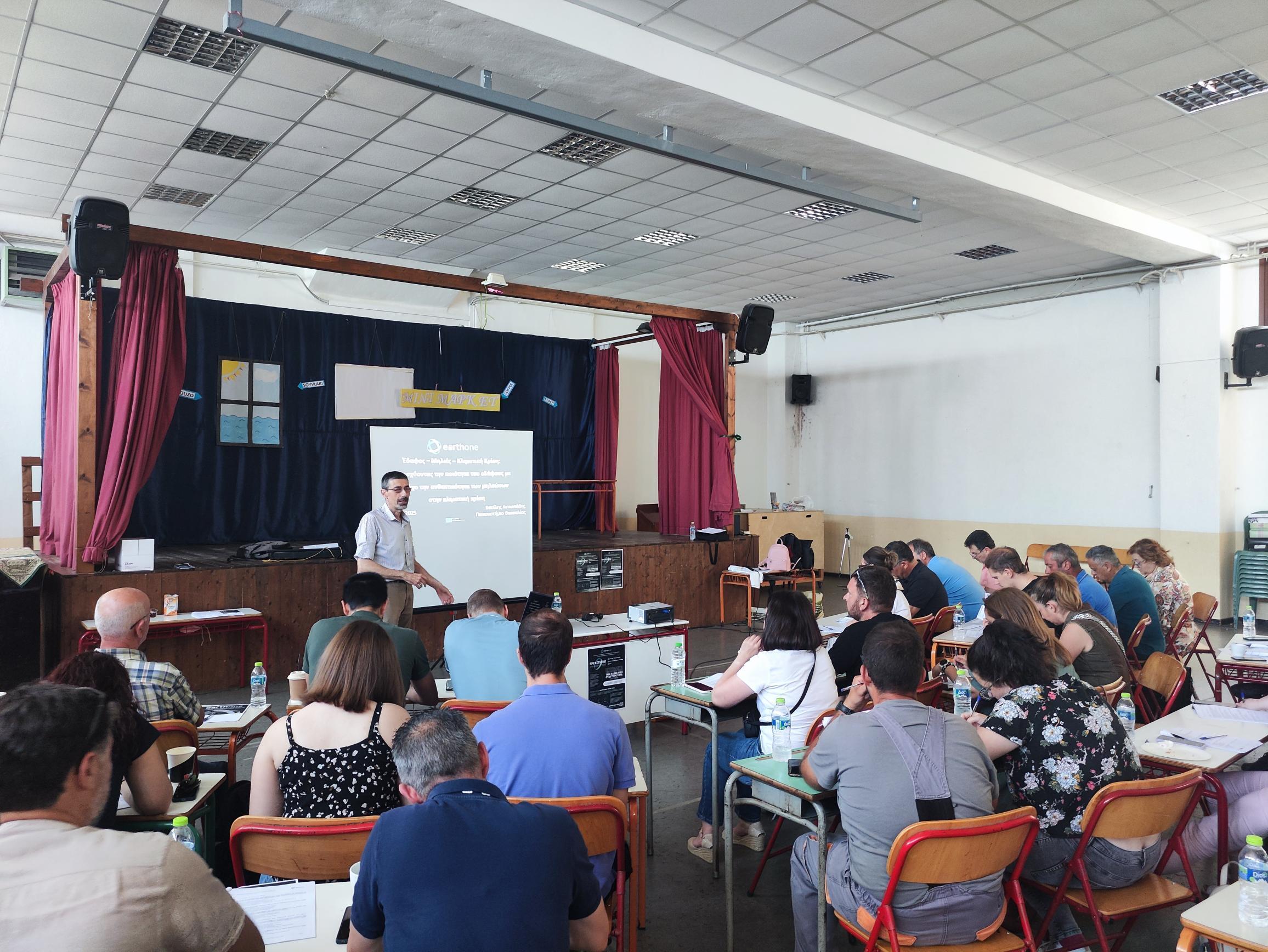
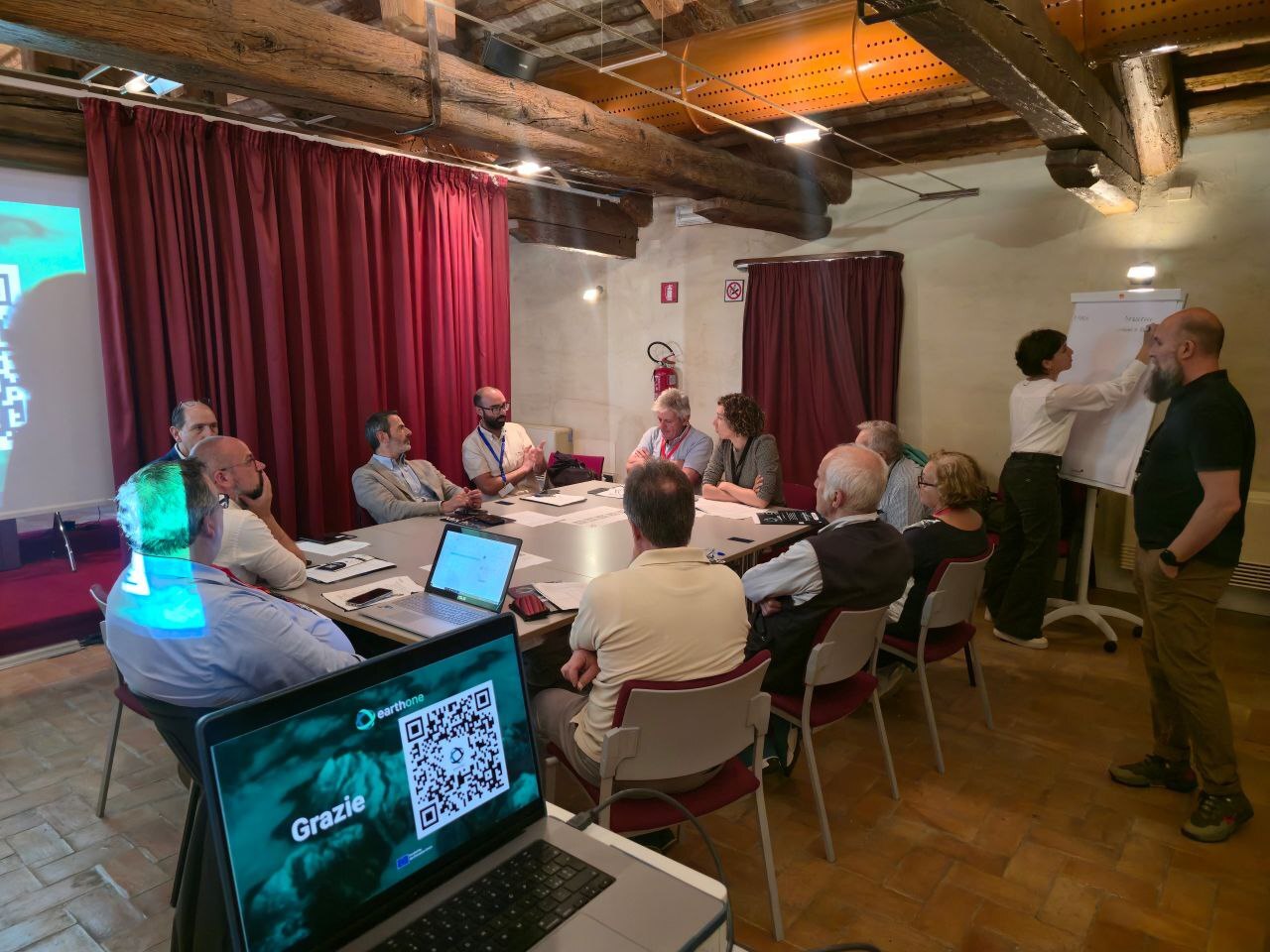
Each workshop followed a structured process. Participants first discussed climate change impacts in their regions through a presentation and questionnaire. They were then introduced to EARTHONE’s tools and invited to reflect on their usefulness, ease of use, and relevance. In Italy, hands-on exercises and SWOT analyses were used to stimulate discussion, while in Greece the schedule focused on group reflection due to time limitations. The online workshop brought together 67 participants, using questionnaires and structured discussions to gather input across multiple countries.
This approach ensured that EARTHONE collected functional, non-functional, and contextual requirements from a diverse group of users, requirements that will directly inform system design in Work Package 3.
Findings from the workshops: What participants told us
Although each workshop took place in a different setting, common themes emerged. Participants shared concerns, expectations, and ideas that now guide the development of EARTHONE’s tools.
Climate change: A sense of urgency across regions
Across all workshops, participants described climate-related pressures that already influence their work. In Italy, 88.8% of respondents reported experiencing major climate changes over the past decade, with rising temperatures and droughts cited by 94% of participants. Flooding and unpredictable rainfall were also frequently mentioned. These changes have economic consequences: 78% linked them to increased management costs, and 67% reported productivity losses or income instability.
Stakeholders in both countries expressed concern regarding future climatic variability and questioned the reliability of long-term forecasting. Many noted that climate adaptation is discussed regularly, with half of the respondents reported talking about it at least once per month, yet institutional support is still perceived as insufficient by 61%.
This context helped frame subsequent discussions on EARTHONE’s digital tools.
Findings on the Multi-Sensing Ecosystem
The Multi-Sensing Ecosystem (MSE) generated strong interest. Participants consistently valued real-time environmental monitoring:
- 63% described real-time monitoring as very useful for their work, and 78% rated the MSE itself as very useful.
• Soil moisture and soil quality were considered the top monitoring priorities (94%), followed by air temperature and humidity (78%).
However, several practical concerns were raised. High implementation costs, limited rural connectivity, and sensor durability were mentioned repeatedly. In Italy and Greece, stakeholders questioned the feasibility of deploying enough sensors to produce reliable datasets, especially for small farms.
Participants also emphasised that monitoring must lead to actionable insights. Many saw value in features such as automated alerts (77%) and AI-based anomaly detection (50%), but insisted that the data must be reliable and easy to interpret. Open-ended comments pointed to the need for better data ownership safeguards, straightforward interfaces, and training for users who are unfamiliar with digital technologies.
Findings on the Scenario Builder & AI Decision Support Tool
The Scenario Builder and AI decision support system prompted in-depth discussion on adaptability, localisation, and transparency.
A large share of respondents believed the tool would be useful for policy and regional planning. Policymakers and regulators were identified as the main expected users (79%), followed by land managers, farmers, and foresters (63%). Water resource planning, agricultural intensification, and carbon-related scenarios were considered the most relevant.
Stakeholders also expressed strong preferences regarding customisation:
• 74% wanted full control over inputs such as field size and crop types.
• Only 26% preferred templates.
• None were satisfied with pre-existing datasets alone.
AI support was welcomed, but cautiously. Participants preferred adjustable AI suggestions (84%) rather than fully automated outcomes. Transparency was essential: 68% wanted access to interactive dashboards explaining how outcomes were generated, and 95% believed confidence scores would help them evaluate predictions.
Discussions in Italy raised additional points. Farmers questioned whether AI-driven recommendations could properly reflect local conditions, especially in regions with diverse microclimates. Several noted that the scalability of such tools might favour large farms, potentially limiting access for smaller holdings.
Despite these concerns, participants agreed that scenario comparison, clear visualisation, and localised data could make the tool a strong asset for climate-resilient planning.
Findings on the Information Factory
Participants viewed the Information Factory as a much-needed platform capable of bringing together environmental, agronomic, economic, and climate-related data in a single space. This created expectations regarding data accuracy and usability.
Among the most valued features were:
• integration of multiple data sources (preferred by 94% across several questions);
• intuitive search and filtering tools (67%);
• GIS-compatible formats and interactive maps (selected by 90% of respondents).
However, several important challenges were identified. Users emphasised difficulties accessing reliable data, inconsistencies in public datasets, and missing information in rural areas. High energy consumption and complex filtering systems were also mentioned, pointing to the need for a design that keeps the interface simple while maintaining advanced functionality.
Participants across workshops stressed that the platform should support regional adaptation, offer clear information on data provenance, and ensure strong security. Data protection was considered crucial; 75% rated strict access control as extremely important, and most respondents supported anonymisation measures for sensitive information.

What these findings mean for EARTHONE
The workshops provided a substantial body of knowledge for the project teams working on the Multi-Sensing Ecosystem, the Scenario Builder, and the Information Factory. Several cross-cutting themes now guide the next phase of development:
- Tools must remain accessible to users with different levels of digital expertise.
- Localisation is essential; farmers and land managers want systems that reflect specific crop types, microclimates, and economic conditions.
- Data security and ownership must be addressed clearly and transparently.
- Connectivity challenges in rural areas require practical solutions and flexible designs.
- AI features must remain explainable, adjustable, and trustworthy.
Above all, the workshops confirmed that digital tools are welcomed when they respond to real operational needs. Farmers, authorities, researchers, and SMEs expressed both interest and pragmatism. EARTHONE’s task is now to translate their input into systems that deliver reliable, understandable, and practical support for climate-resilient land use.
a