
The Sasse Rami pilot site in north-eastern Italy has continued to serve as an important location for studying how agroforestry practices influence crop performance and soil conditions. Between January and September 2025, research teams worked across the experimental fields to examine soybean cultivation under a mature poplar-based alley cropping system. The site features seven-year-old poplar trees arranged in north–south rows spaced 40 metres apart. Several poplar hybrids are present, and soil sampling is being conducted in areas corresponding to the Tucano, Aleramo, and Moncalvo types to understand variation across the system.
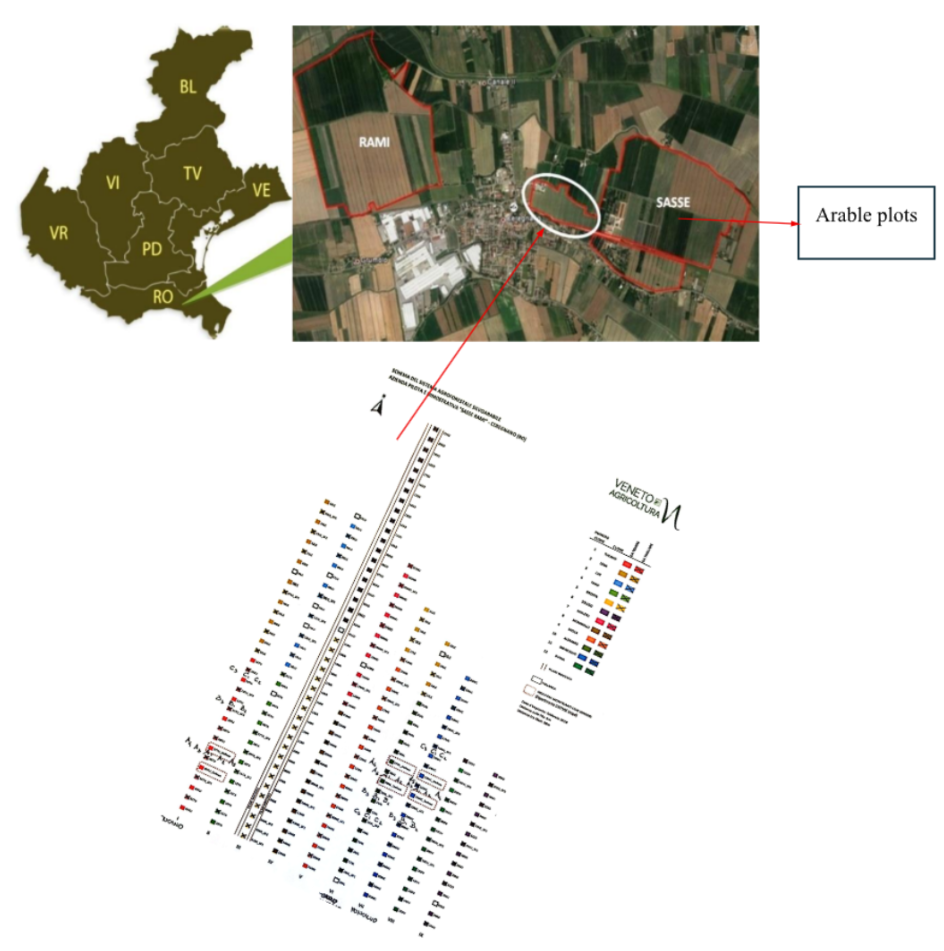
This year’s work focused on comparing two soybean varieties, Hiroko and M10. Hiroko follows a longer growth cycle, while M10 completes its cycle more quickly. Both varieties were grown within the agroforestry layout as well as in open arable plots, allowing researchers to observe how each responds to tree proximity, light availability, root competition, and microclimatic conditions shaped by the poplar rows.
On 29 September 2025, soil samples were collected from agroforestry alleys, the arable reference plots, and the nearby poplar nursery area. Sampling took place at a depth of 0 to 15 centimetres using augers, both beneath the poplar canopy and at several distances into the cropped area. These samples are currently undergoing analysis for physical and chemical characteristics, as well as biochemical indicators linked to soil fertility and health. Once the analysis phase is complete, the findings will be integrated into the wider dataset under development for the site. At the same time, agronomical, climatic, and soil data from previous seasons are being assembled to support long-term evaluations of system performance.
A significant structural intervention took place earlier in the year. On 9 February 2025, alternate poplar trees were harvested, increasing the spacing within each tree row from six to twelve metres. This adjustment changed light distribution and root competition patterns, prompting a renewed assessment of crop-tree relationships. To understand these effects, researchers examined soybean performance at three, six, twelve, and twenty metres from the poplar line on both the eastern and western sides of the rows.
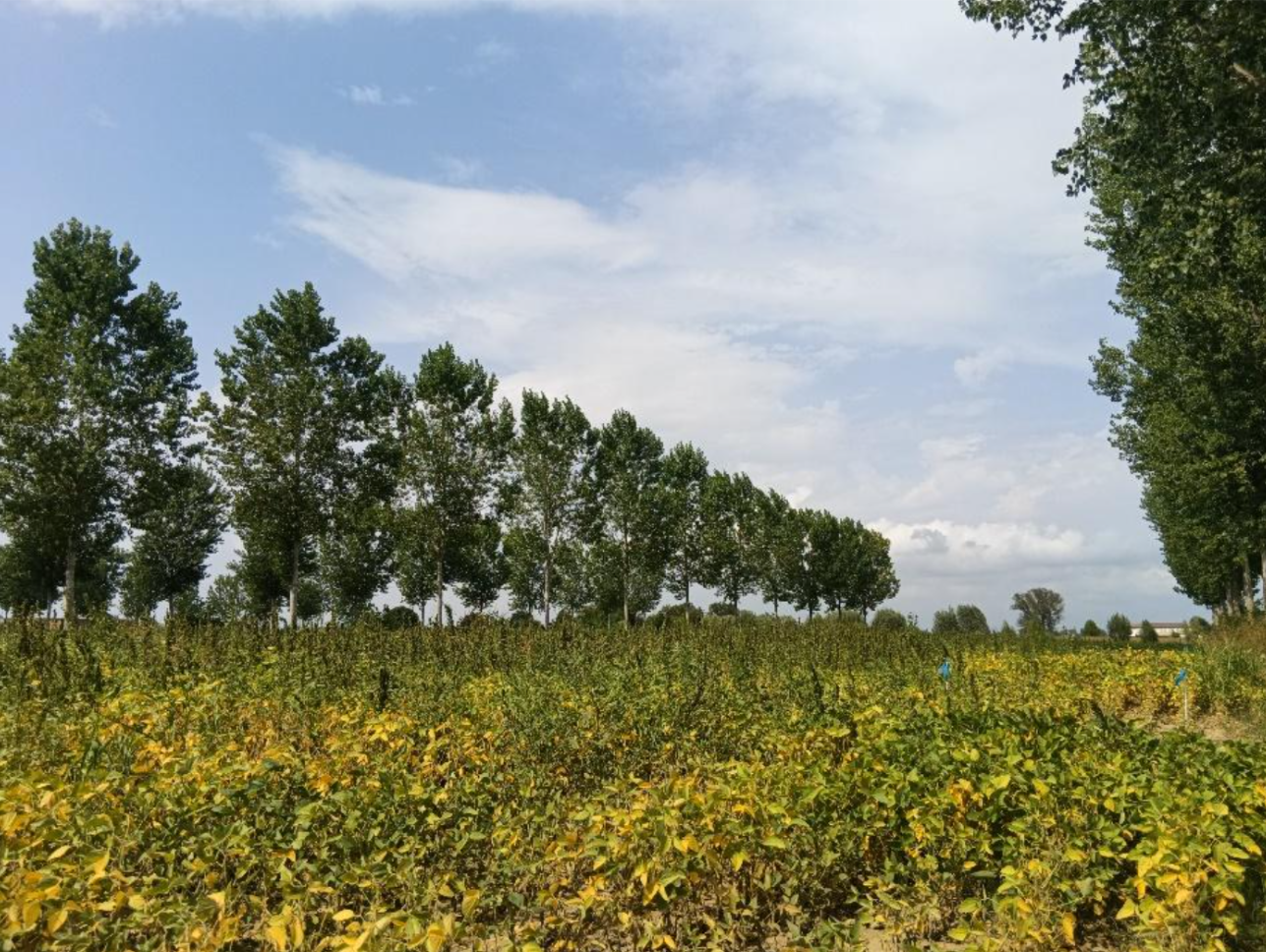
A network of sensors was installed across these positions to measure soil conductivity and moisture, air temperature and humidity, wind speed, and solar radiation. Equipment such as TDR, TEROS, and ATMOS sensors, along with anemometers and PAR instruments, recorded microclimatic variation throughout the season. These data now support the interpretation of crop responses observed across the site.
From July to September, several field investigations were completed to assess soybean behaviour within the agroforestry environment. Canopy NDVI measurements were taken to track plant vigour, while SPAD readings provided insights into leaf chlorophyll content. Additional observations captured plant height, branching, leaf numbers, and the timing of key developmental stages. In early August, root growth was examined to a depth of one metre, and root nodules were counted within the upper twenty centimetres of soil. Shoot biomass was quantified simultaneously at multiple distances on both sides of the poplar rows.
The emerging findings show a clear spatial pattern in soybean development. Close to the tree rows, soybeans experienced strong competition, which resulted in reduced germination and slower, restricted early growth. This produced a noticeable “wave effect”, where plants nearest the trees developed more slowly, while those positioned further away displayed gradual recovery as conditions became less limiting. Initial observations suggest that the Hiroko variety copes more effectively with these constraints than the shorter-cycle M10.
Harvesting took place in early October, and yield and quality assessments are now progressing. These results, together with the soil and microclimatic data, will contribute to ongoing evaluations of variety suitability and agroforestry performance at Sasse Rami. The work conducted this year forms part of EARTHONE’s broader effort to identify farming systems that support soil health, stable crop production, and resilient land management across European landscapes.