
On 19 December 2025, researchers from the University of Thessaly and ELGO-DIMITRA visited the EARTHONE pilot fields in the Pelion area of Central Greece. The visit marked the start of field activities linked to soil erosion and runoff monitoring within the Greek pilot of the EARTHONE project.
The research team focused on installing soil erosion measurement devices and collecting baseline soil samples. These first measurements establish a reference point for the experimental treatments that will be assessed over time. Fieldwork was carried out by Dr. V. Antoniadis and Dr. G. Thalassinos from the University of Thessaly, together with Dr. E. Evangelou and Dr. A. Grammenou from ELGO-DIMITRA.
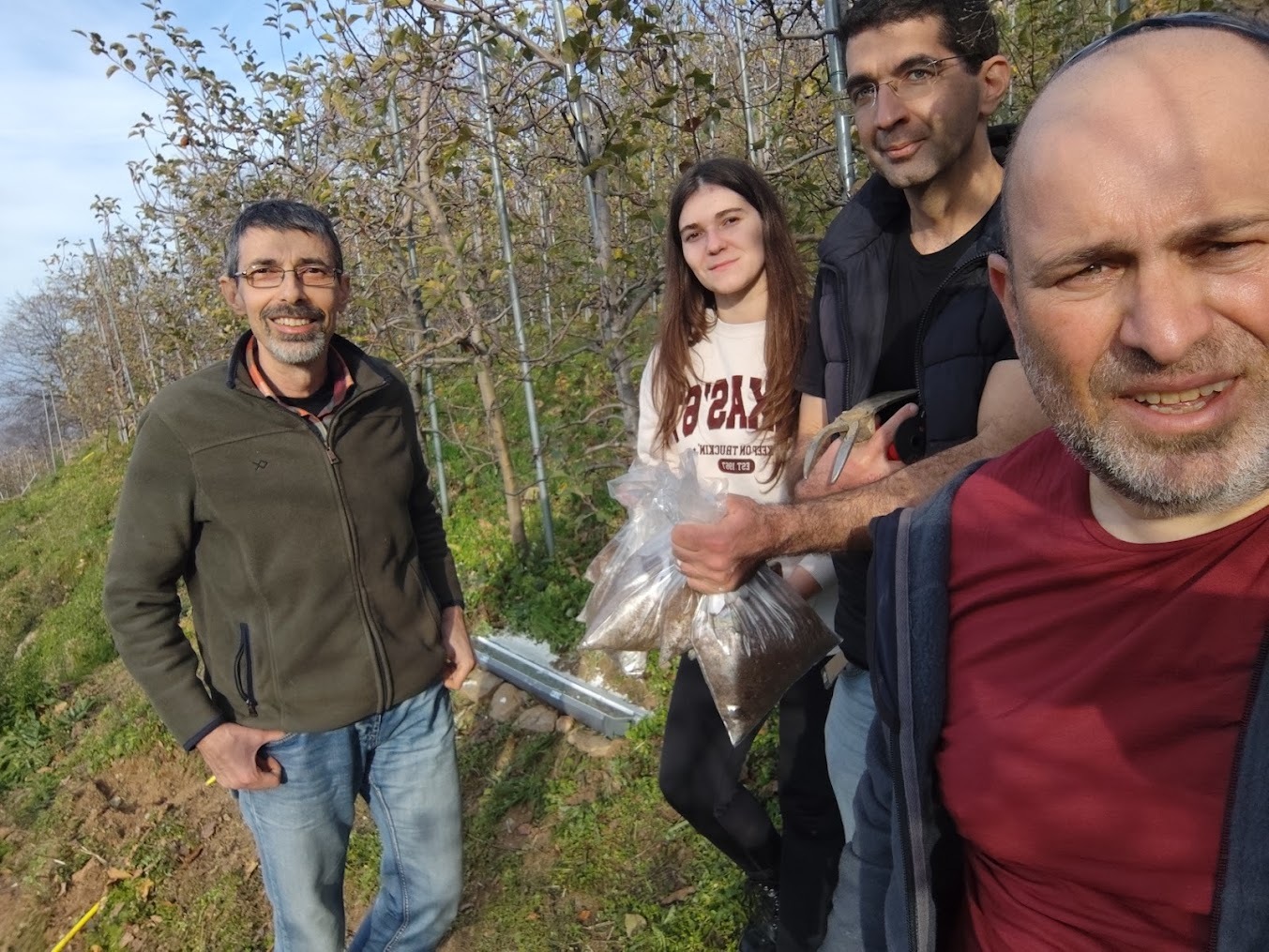
The pilot site is located in apple orchards managed as agroforestry systems in the Pelion region. Within this setting, the study examines how different soil management approaches affect soil erosion and surface runoff. The objective is to quantify sediment loss and water movement under realistic farming conditions, using methods that allow direct comparison between practices.
To capture erosion and runoff data, Gerlach-type troughs have been installed across three experimental treatments. One treatment applies a cover crop based on a legume and cereal seed mixture. A second treatment relies on natural vegetation, which is periodically mown, with plant residues left on the soil surface to act as mulch. The third treatment follows the conventional soil management practice currently used by the local producer and serves as the control.
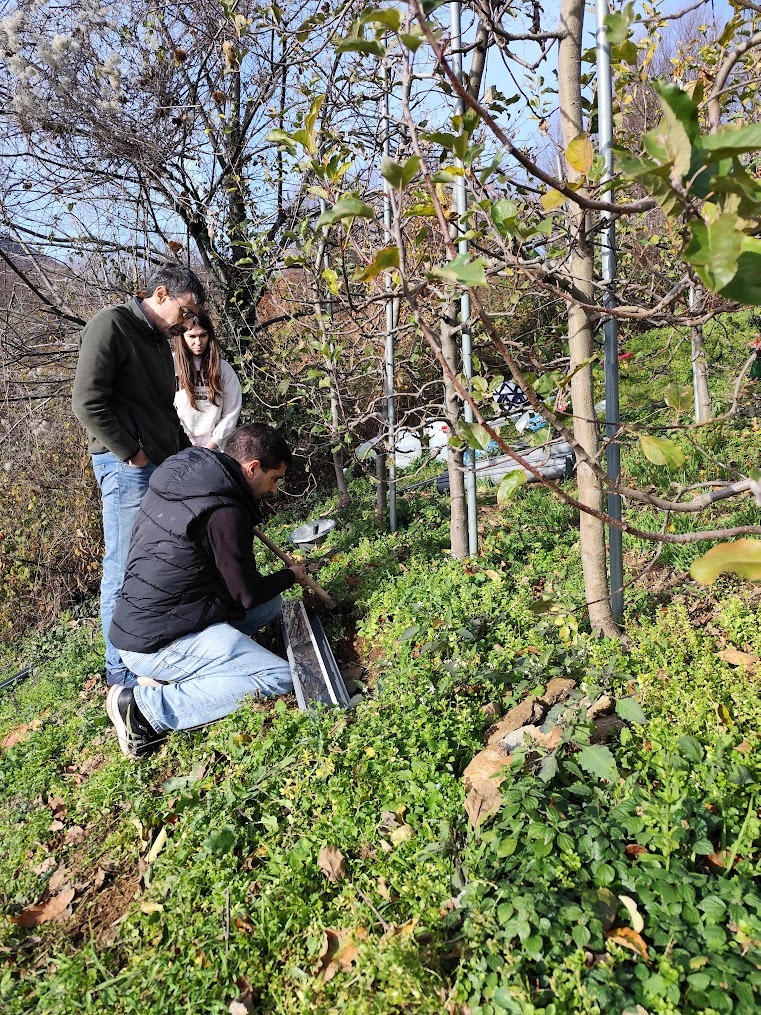
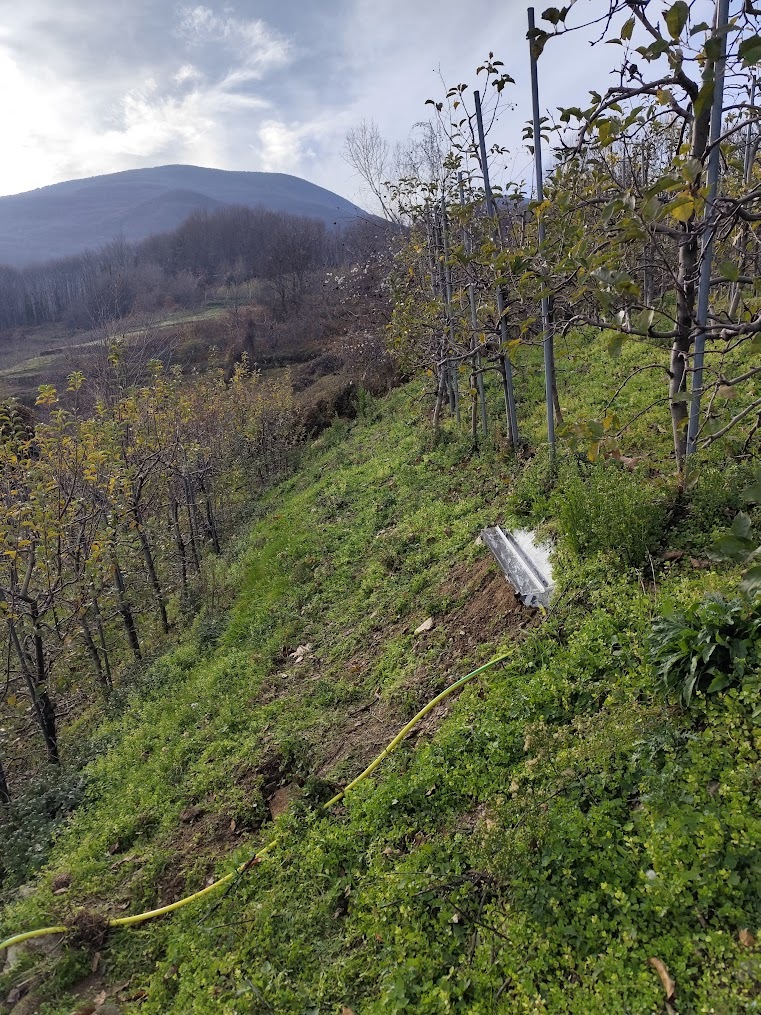
By monitoring these plots over time, the research team expects to observe clear differences in soil behaviour. The cover crop treatment is expected to contribute to improved soil quality and reduced soil erosion and surface runoff when compared with conventional management. Increased soil cover and improved water infiltration are central factors in this expectation, particularly in a region where slope and rainfall can intensify erosion processes.
The installation of monitoring equipment and the collection of baseline samples represent an essential step for the Greek pilot. The data generated at the Pelion site will support a deeper understanding of how agroforestry-based soil management strategies perform under Mediterranean conditions and how they can contribute to more resilient agricultural systems.