
Climate change is already altering the conditions in which land is managed across Europe. Drought, heatwaves, wildfires, pressure on water resources and shifting agricultural patterns are becoming part of the everyday context in which farmers, researchers and policymakers make decisions.
These changes framed the EARTHONE World Café held on 10 September during the Soils4Europe Conference in Coimbra. Across two parallel roundtable discussions, the conversation moved from environmental pressures to the socioeconomic and policy conditions that influence how land-use systems can respond. What emerged was not a single pathway for adaptation, but a set of closely connected challenges involving land, livelihoods, knowledge, regulation and investment.
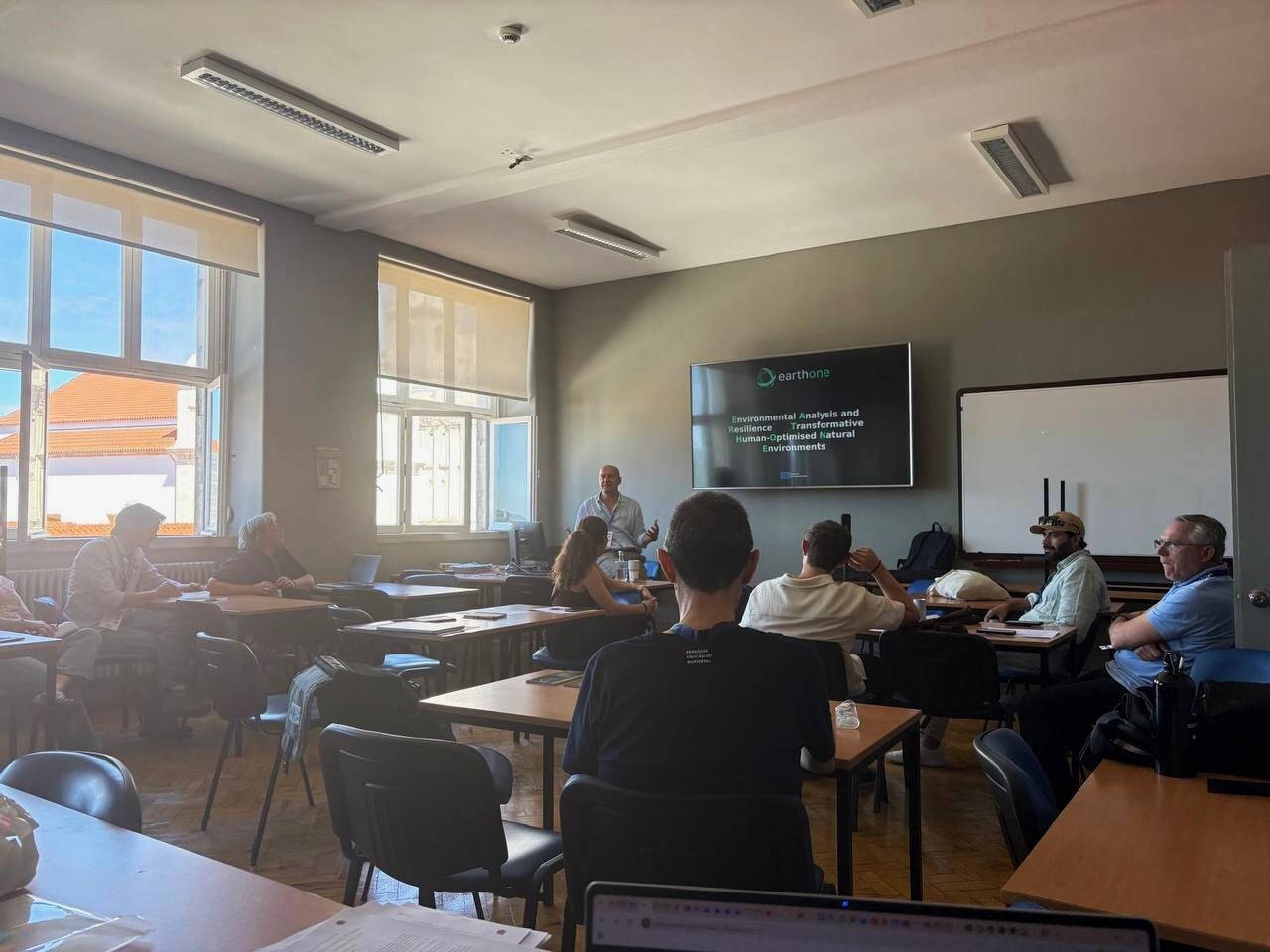
Land use is already changing
Drought, heatwaves, wildfires and the increasing need for water to maintain crops were among the main pressures raised during the discussions. At one table, drought was associated with desertification and soil erosion. The conversation also touched on longer seasons, the northward shift of some crops and changes in natural vegetation, including the spread of species associated with warmer conditions.
At the same time, environmental change was linked to demographic effects. Participants referred to shifts in population distribution and relocation connected with extreme events, showing how changes in land use can extend beyond agricultural production itself.
Climate, however, was only one part of the picture. Agricultural policy can also influence how land is used, and the discussion referred to the Common Agricultural Policy and highly intensive olive cultivation in Portugal as examples of how policy directions and land-use choices can interact with environmental pressures. This, in turn, showed why better monitoring of land-use transitions matters. Comparable observations over time could provide a clearer picture of how climatic pressures and policy choices are influencing change.
The ability to adapt is not evenly distributed
From there, the discussion turned to who is most exposed to these changes. Small farms were identified as particularly vulnerable, not only because of environmental pressures but also because they may have fewer resources and less access to the knowledge needed to respond. The consequences can then spread further through the food system, with risks ranging from higher food prices to possible declines in quality and reduced variety for consumers.
Another concern was the gradual loss of traditional knowledge and the cultural effects of a declining farming population. This places land-use change in a broader context, where the continuity of farming, local skills and community life also matter. As a result, the conversation extended beyond individual farms to the wider value chain, other economic sectors and even urban planning.
Communication emerged as another important issue. Socioeconomic impacts are not always explained clearly, while awareness of climate-related risks, including effects on pollinators and human health, can remain limited. Consumers were also seen not only as people affected by these changes, but as actors whose behaviour can influence outcomes. Making these consequences clearer and more useful for farmers, consumers and other actors across the value chain was therefore identified as an important priority.
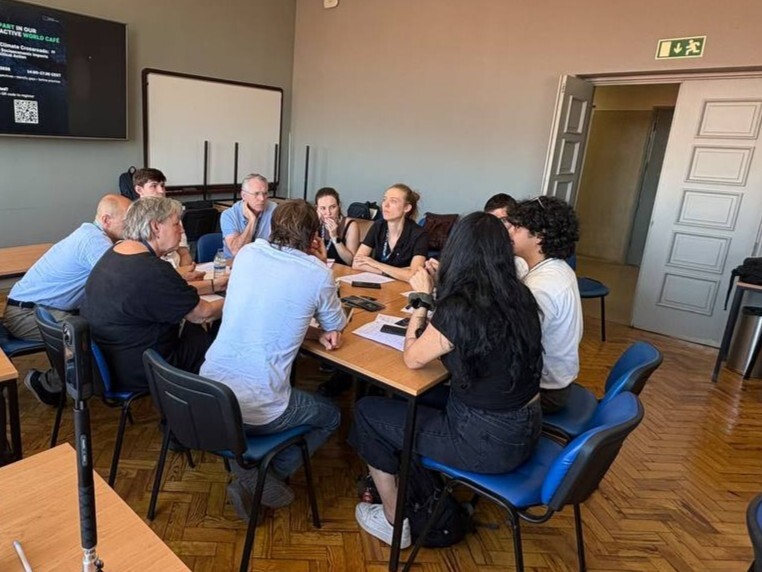
Some enablers can also become barriers
The second roundtable added another layer to the discussion. Many of the factors that can support adaptation were described as two-edged swords, since their impact depends greatly on how they are designed and applied.
Regulation is one example. It can encourage more sustainable practices, but it may also become a constraint when it is too rigid. Financial support works in a similar way. Subsidies and investment can help farms introduce new practices, yet their effect may remain limited without sufficient knowledge, interest and engagement.
Research, farmer involvement and public policy were discussed in similar terms. In each case, their value depends not only on whether support exists, but also on how well it is implemented and connected to real needs.
There is no simple win-win
This complexity also makes prioritisation difficult. The roundtable stressed that economic, productive and environmental objectives cannot always be maximised at the same time, so trade-offs need to be recognised when decisions are made.
Adaptation is therefore not simply a matter of identifying the technically best option. It also involves deciding which objectives should be prioritised, for whom and under what conditions. In this context, education and knowledge transfer were repeatedly seen as important. Their role extends across the whole system, from farmers and land managers to researchers, policymakers and consumers.
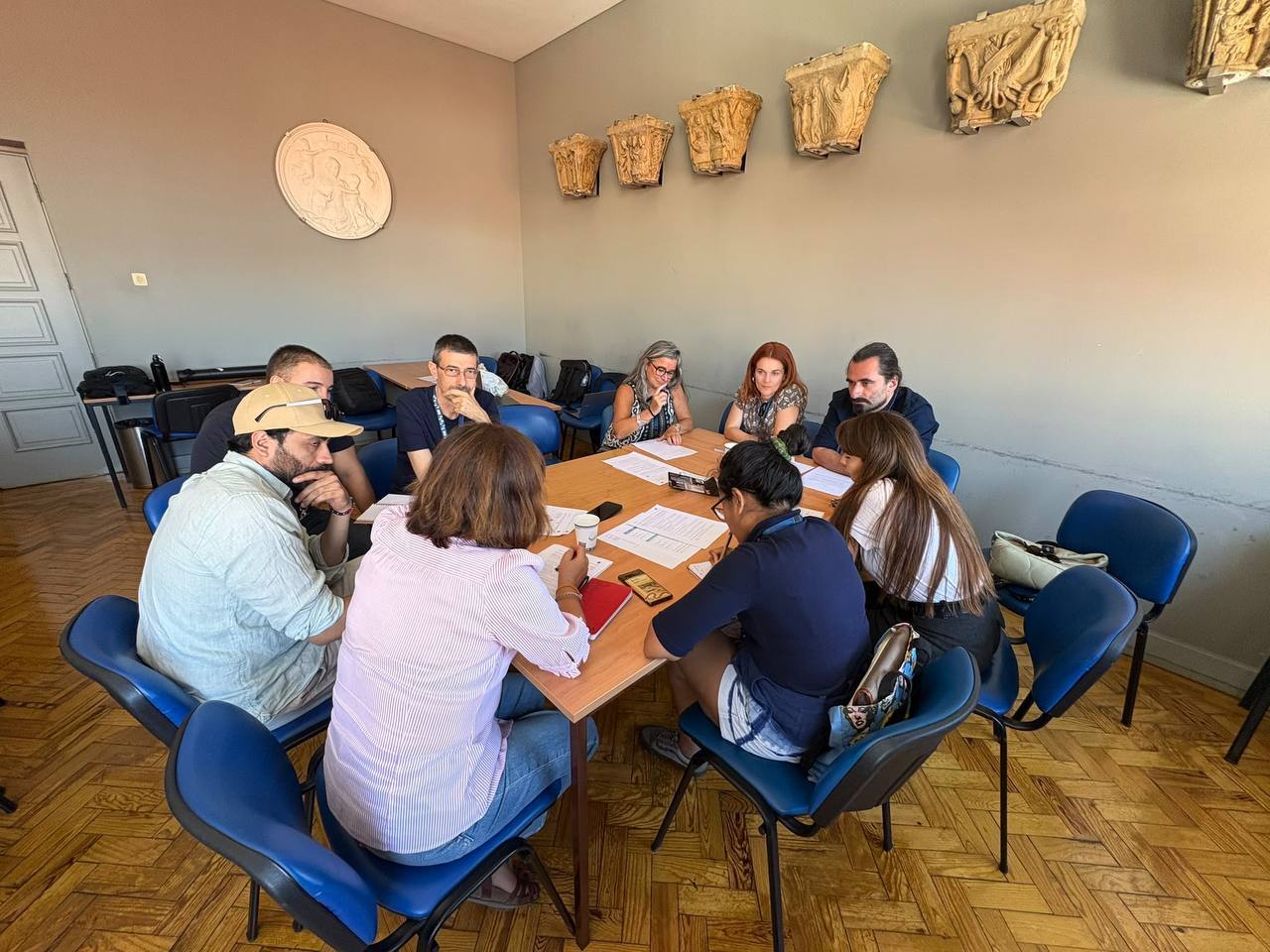
Adaptation needs practical support
Policy also came under close attention. One table reported a perceived imbalance between the emphasis placed on mitigation and the support available for practical adaptation. The point was not to reduce the importance of mitigation, but to give greater attention to the conditions that allow agricultural and land-use systems to adjust to changes already taking place.
Against this background, new business models, technical assistance and economic support were all mentioned as possible ways forward. New and young farmers were seen as having particular potential for innovation, while concern was also raised about the loss of traditional agricultural knowledge.
These two ideas do not necessarily conflict. On the contrary, one possible direction for follow-up is to encourage knowledge exchange between new entrants and established farmers, linking innovation with the continuity of local experience.
Land consolidation was also proposed as a policy direction. At the same time, the discussion noted a potential tension with the viability of small farms. The issue is therefore not simply whether consolidation takes place, but how it is designed and who benefits from it.
Progress cannot be reduced to one number
The question of monitoring brought the discussion back to evidence. There was broad agreement that no single indicator can capture all dimensions of land-use adaptation, as the most appropriate measures depend on the objective being assessed.
Production, income, water use and soil organic matter were all mentioned as relevant indicators. Carbon flux was also identified as particularly useful from an environmental perspective. A system that sequesters more carbon than it emits may indicate that a piece of land is moving towards a more positive environmental state.
Even so, this is only one dimension of performance. Economic viability, productivity, water use and social consequences also matter. For that reason, a combination of indicators may provide a more realistic picture than any single measure alone.
Connecting evidence with action
Across both roundtables, the different strands of the discussion pointed to the same conclusion. Understanding change is not enough if the people managing land do not have the capacity to respond.
Monitoring land-use transitions, communicating socioeconomic consequences, supporting viable business models and improving access to knowledge are closely connected. Rather than separate challenges, they form part of the same adaptation process.
For EARTHONE, this reinforces the importance of looking at land-use change as an environmental, economic and social issue at the same time. Adaptation needs to work in practice. That means linking evidence with technical and economic support, recognising trade-offs and creating conditions in which farms and communities can respond to change without losing sight of long-term environmental goals.