
Research carried out at EARTHONE’s Italian pilot site, the Sasse Rami demonstration farm in Ceregnano, has shown that poplar grown in an agroforestry alley-cropping system can reach commercial size faster than trees in conventional high-density plantations, while maintaining suitable wood quality.
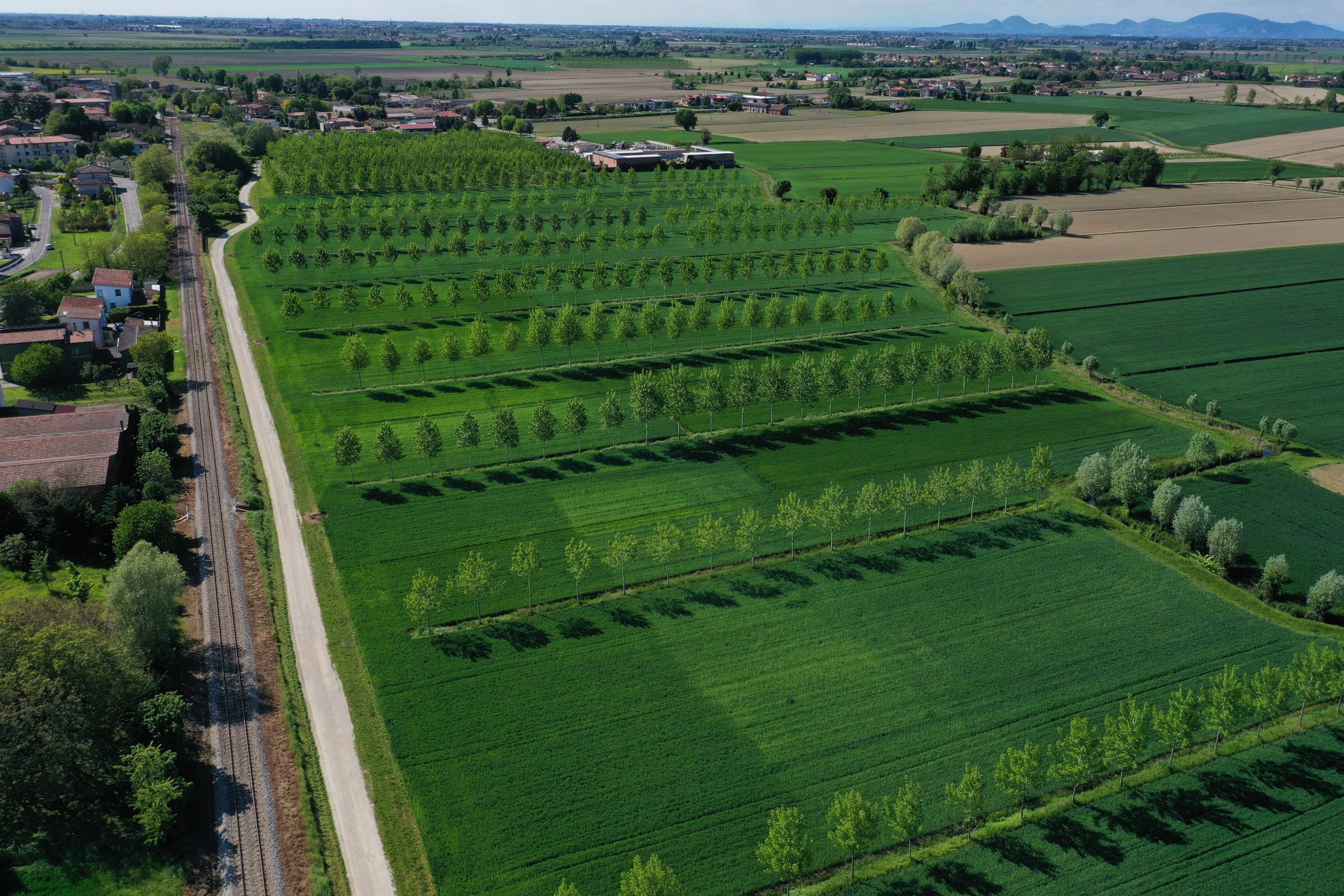
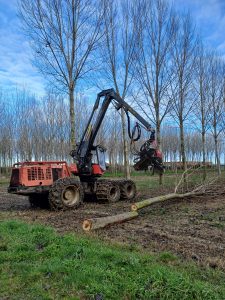
The trial was established by Veneto Agricoltura in 2018 and compared 14 Environmentally Sustainable poplar clones selected by CREA Foreste e Legno for their resistance to major diseases and pests. The clones were planted under two conditions: a traditional plantation with 6 × 6 metre spacing, and an agroforestry system with north-south rows placed 40 metres apart alongside drainage channels, with six metres between trees. Researchers from the DAFNAE and TESAF Departments of the University of Padova monitored tree growth, phenology and wood quality until the final harvest in February 2025.
Faster growth and commercially suitable timber
After seven growing seasons, trees planted in the agroforestry rows had trunk diameters around 30% larger on average and reached commercial timber size approximately three years earlier than those in the conventional plantation.
The wider spacing did not compromise timber quality. Trunk straightness and veneer quality remained within industry requirements, while the agroforestry plots produced 33% more veneer sheets overall. The Aleramo, Moncalvo and Mombello clones also produced a higher share of top-quality sheets.
The use of Environmentally Sustainable clones made it possible to reduce chemical treatments almost completely, lowering production costs and limiting the environmental effects associated with pesticide use.
Benefits for farmers, industry and the environment
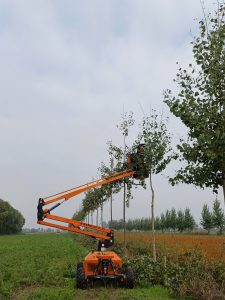
Earlier harvesting can shorten the time needed for farmers and landowners to recover their investment, making poplar agroforestry a more attractive production option. The results are also relevant to the Italian timber sector, as domestically produced, high-quality poplar could help reduce reliance on imports, which currently account for more than one-third of national demand.
Alongside timber production, the system can contribute to carbon sequestration, nitrate absorption and biodiversity. Its simple row-based design also allows agricultural production to continue between the trees and could be adapted to other species, including oak and eucalyptus.
Veneto Agricoltura will publish a practical technical guide in 2026 to make the findings available to farmers and support the wider use of this approach in Italy.